The history of Thanksgiving is more interesting than the mythical Pilgrims and Indians tale many of us learned in grade school.
For much of the 19th century Thanksgiving was mostly considered a Yankee holiday. To Southerners it implied domination by the North, especially after Abraham Lincoln declared it a national holiday in 1863 to honor the Union victory at Gettysburg.
Previously, Thanksgiving holidays were proclaimed by governors, who also set the date each year. In 1815, however, President James Madison declared a Thanksgiving Day to celebrate peace with England. Still, it retained a strong New England flavor. A Thanksgiving dinner in Philadelphia that year was attended by New Englanders, “got up in Yankee style, and finished with a compliment of Yankee toasts and hymns.”
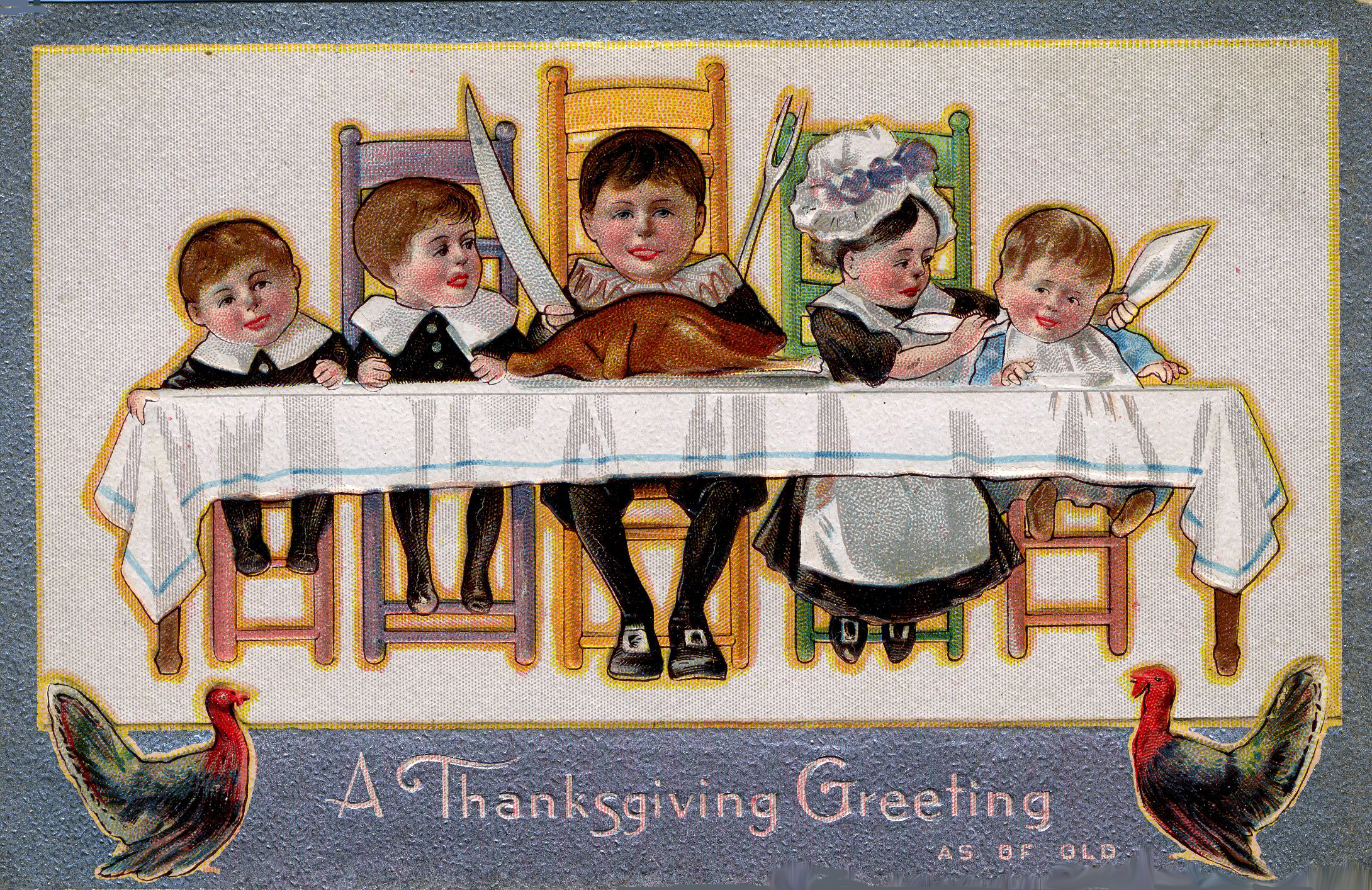
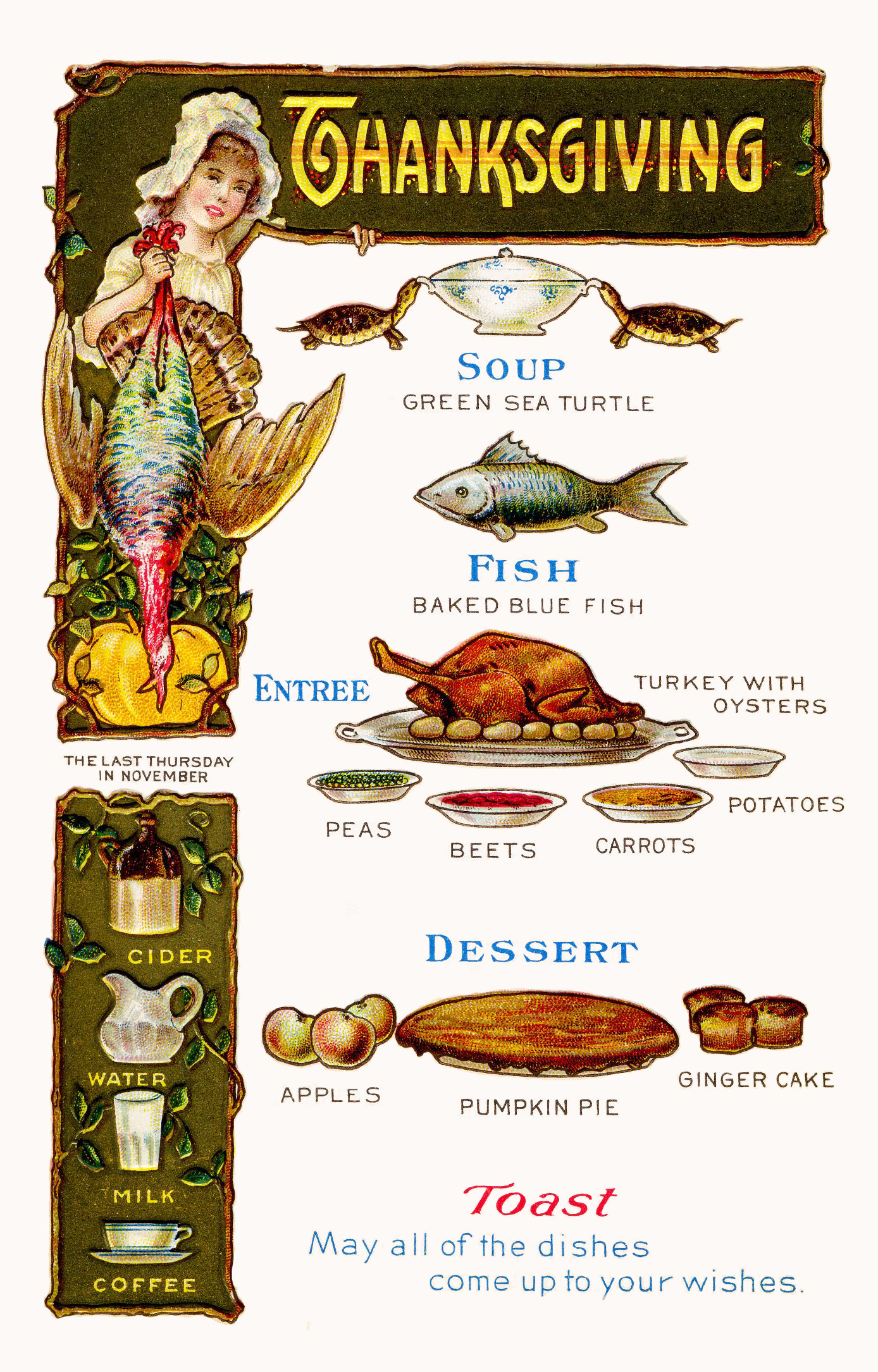
Turkey was served for Thanksgiving in the early 19th century, but I’ve also seen other main dishes mentioned, such as goose and chicken pie. [The postcard shown below is from the early 20th century and pictures food that was (presumably) popular for the holiday then.]
In 1821 a state outside New England – New York – officially recognized the holiday as the observance spread slowly. By 1839 seven states recognized the day: New York, Massachusetts, Connecticut, Maine, Michigan, New Jersey, and Rhode Island. Homecoming was a popular theme, especially in Massachusetts where rocky land had encouraged Westward movement to better farming conditions.
The holiday traveled farther in the 1840s and 1850s. The New York Times reported that by 1859 all the Eastern and middle Atlantic states, and the Western territories, plus five Southern states celebrated Thanksgiving.
But the holiday’s spread still remained uneven. Although the governor of Missouri proclaimed a day of Thanksgiving in 1843, it was observed only seven times over the next 20 years, and many in that state knew nothing of it until after the Civil War, despite Lincoln’s proclamation.
And it wasn’t always celebrated in the way that is considered typical today. According to historian Elizabeth Pleck, many working class men regarded Thanksgiving as a holiday like any other, that is, a time to drink, parade noisily through the streets, and to demand treats from the gentry. In 1859, the board of aldermen of the District of Columbia refused to set a date for Thanksgiving because it had become an occasion for widespread lawbreaking.
Eventually, in the late 19th century the rowdiness tradition was channeled into other male activities such as Thanksgiving Day football matches. In the West, Pleck says, Thanksgiving dinner tended to be simple and the day was largely devoted to hunting.
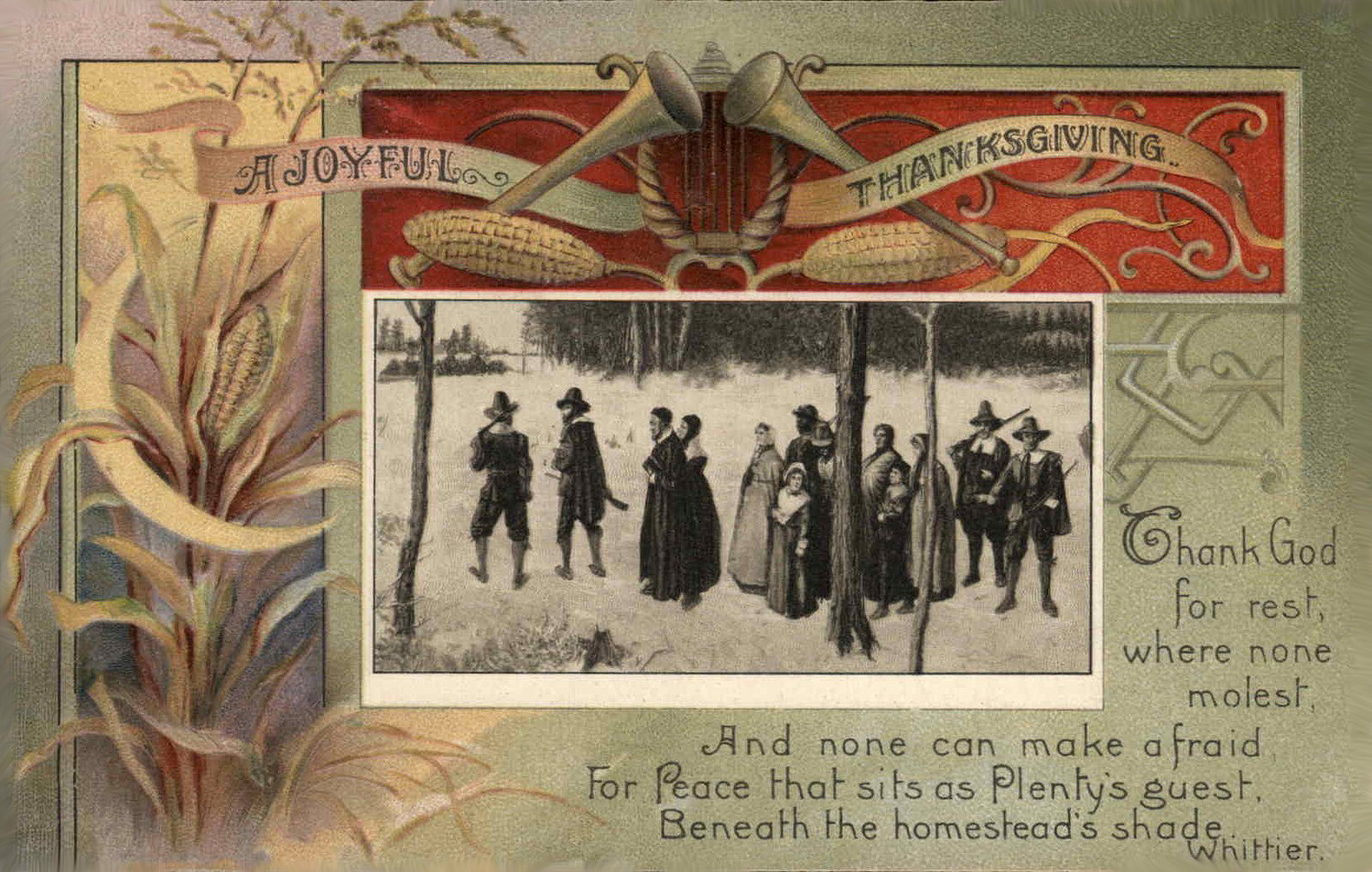
She suspects that even then “Thanksgiving celebration was most common among the middle and upper classes in New England and the middle Atlantic states, and among Protestants.” The job of integrating everyone else was a task for late 19th and early 20th-century patriotic societies, public schools, and popular magazines. Immigrants were subtly encouraged to see themselves as modern-day Pilgrims being welcomed by the natives.
The strategy worked. So even though the Pilgrims had very little to do with the original holiday celebrations they came to dominate popular historical accounts.
© Jan Whitaker, 2026

 It's great to hear from readers and I take time to answer queries. I can't always find what you are looking for, but I do appreciate getting thank yous no matter what the outcome.