
While on a short visit to New York City, I stepped inside Fishs Eddy on Broadway at 19th Street to look at their vintage restaurantware. I was struck by this poster used for decoration in the store. It shows a variety of teacup models, probably from the 1920s.
Then thick, almost unbreakable, cups for coffee and tea were commonly used in popular restaurants that served masses of customers. What struck me about the poster was that some cups were named for actual restaurants. I’m guessing that these were restaurants that had requested a particular, possibly custom, design. I immediately noticed the names Child’s, the leading chain of that era; Lorber, an old Philadelphia restaurant that had been at the 1876 Centennial; and Marston, a sturdy Boston standby. On second glance I noticed Hollenden, a hotel in Cleveland.
 The other thing that struck me was the number of designs that scarcely differ from each other. Evidently restaurants and hotel dining rooms had very precise ideas about what they wanted in a cup. The differences appear so slight, as with Sharon vs. Colonnade. I wondered, were customers who drank from the Duquesne equipped with especially big fingers?
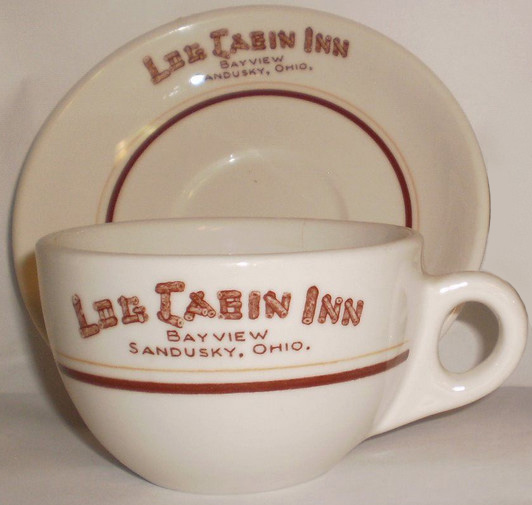
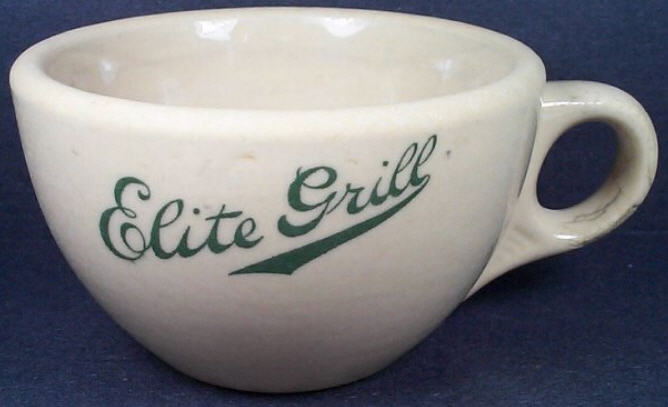 I tried to match up the poster’s teacups with other restaurant cups – and failed. The Elite Grill and the Log Cabin Inn seem to have handles that are ever so slightly different from each other as well as the illustrated cups.
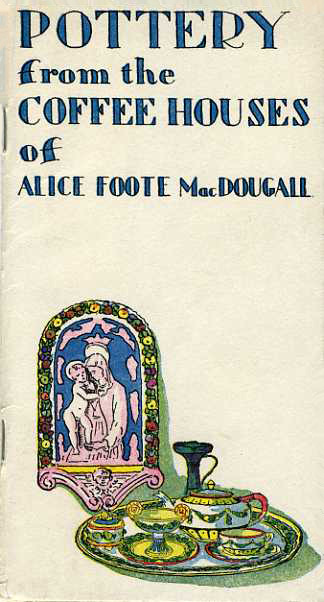 The other bit of historical minutia that sprang to mind was how Alice Foote MacDougall, proprietor of a 1920s NYC chain of coffee/tea shops that emphasized “atmosphere,” hated the serviceable china found in everyday restaurants and soda fountains of her time. In 1928 she wrote it was “so thick that I felt I needed to build an extension on my lips to drink from it.” To protect her restaurant customers from such an unpleasant experience she imported china from Italy. She also sold it retail from showrooms at her places on West 46th and 47th streets, Firenze and The Piazzetta, respectively.
In fiction of the 1920s and 1930s writers employed thick cups as signifiers of cheap restaurants, usually encountered by a downtrodden hero or lady in distress who has fallen from a higher status. In a similar vein, thick cups took on an aura of humble, bedrock authenticity. The columnist O. O. McIntyre captured this attitude during the Depression when he wrote of midnight lunch wagons: “Here the real life versions of Wallace Beery and Jimmy Cagney eat in shirt sleeves with hats on. Coffee is – as it should be – in thick cups.”
© Jan Whitaker, 2014

 It's great to hear from readers and I take time to answer queries. I can't always find what you are looking for, but I do appreciate getting thank yous no matter what the outcome.
 Restaurant-ing through history
You can imagine the sound of the dishes in the restaurant kitchens, clattering and tinging and being washed en masse.
Great column as always!!