Category Archives: restaurant decor

“Hot Cha” and the Kapok Tree

What kind of career might the son of a junk dealer father and a mother who owned a restaurant end up with?

If he was Richard Baumgardner he would run restaurants raucously decorated with gilded and spray-painted objets d’art — wonderfully kitschy palatial junque bought by the ton in Europe (70 tons of statues in 1966). When his warehouse ran low on statues and urns, he would make plastic replicas with rubber molds.

His customers would find it all enchantingly “different.”

But first, he’d take a detour into the entertainment world as a jazz-era musician and bandleader known as Dick “Hot Cha” Gardner. As an introduction to his restaurant career in 1936, Dick inaugurated the Hot Cha Supper Club in conjunction with his mother Grace’s tea room, the Peter Pan Inn in rural Urbana MD. After she died in the 1940s, Dick took over the Peter Pan and transformed it into a let’s-drive-to-the-country mega-attraction for Washington DC families. In 1958, retired from bandleading, Dick opened his first Kapok Tree Inn in Clearwater FL, on the site of a tree planted in the 1880s.

It’s hard to know how to classify his restaurants. They fall into two of my classifications: 1) the high-volume restaurant, and 2) the curiosity-shop restaurant filled with quaint stuff.
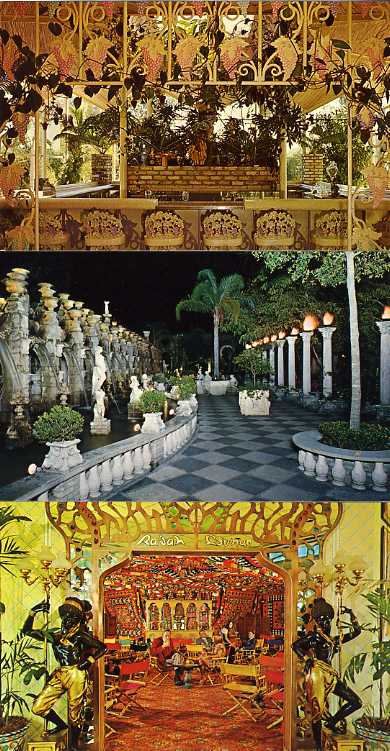
The decor at the Clearwater Kapok Tree was a mix of light fixtures from Paris, chandeliers gathered from the DC Italian Embassy and old theaters in Baltimore and New York City, paneling from a De Medici compound replicated in plastic, and on and on.

Yet for all their madcap faux elegance, Dick’s restaurants followed a rigid formula designed for maximizing profits and minimizing costs. Magically, it worked. Despite ticket windows where customers were required to prepay their dinner tab, a teen-age staff, long waits for tables (in the bar), sticky sweet rum drinks, and limited menus with pedestrian cuisine, customers absolutely adored these zany buses-welcome eateries.

For years diners had just four dinner choices: fried chicken, ham, deep fried shrimp, and steak. When customers sat down at their tables, servers collected their receipts, knowing immediately by the prices what they had ordered. A complete meal included a typical 1950s melange of appetizers which never varied year in and year out, whether in Maryland or Florida — cottage cheese, (sweet) pickled vegetables, muffins, and apple butter. Sides were roast potatoes, peas in mushroom sauce, beets, and hush puppies. Ice cream for dessert and seconds on everything but the entrees. Boxes were provided for leftovers and the complimentary tall cocktail glasses. Few left empty-handed.

The Kapok Tree Inns prospered with the Pinellas County boom of the early 1970s. By 1978, two years after Dick died, there were three Kapok Tree Inns, in Clearwater, Madeira Beach, and Daytona Beach. The first remained the largest, seating at least 1,700. On really busy days upwards of 5,000 meals were served there.

Controlling interest in the Kapok Tree corporation, which also included the Peter Pan Inn and a couple of Baumgardner’s Restaurants in Florida, passed to Dick’s widow, a former waitress at the original Clearwater restaurant, who had largely been running the operation since he had a stroke in 1970. A year after his death, she told a reporter that hers was the most profitable publicly-held restaurant chain in the nation. The Daytona Beach Kapok Tree closed  in 1981, and the Clearwater restaurant closed ten years later.

I wonder what happened to all the wacky furnishings?

© Jan Whitaker, 2011

23 Comments

Filed under popular restaurants, restaurant decor

Spectacular failures: Café de l’Opera

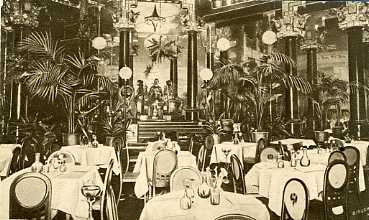
In 1910 the media was abuzz with the new Café de l’Opera on Broadway between 41st and 42nd streets in NYC. Its enormous cost and the stunning, over-the-top lavishness of its interior set a new standard for opulence on the glittering White Way. Could anyone have guessed that in a mere four months this splendid “lobster palace” would fail?

Given its fate, how perfect was it that the crowning jewel of the interior decor was a billboard-sized painting of the fall of Babylon installed prominently on a landing of the 22-ft wide staircase?

The after-theater eatery was designed to be the showplace of Times Square. It was financed by a consortium of investors that included architect/decorator Henry Erkins and John Murray, impressario of the almost-as-splendiferous Murray’s Roman Gardens, also designed by Erkins. The team sunk millions into gutting the old Saranac Hotel and turning it into a fantasy Babylonian stage set worthy of the Hippodrome. The bill for interior renovations and decor, under Erkins’ direction with Stern Brothers department store acting as general contractor, came to $1,250,000, a sum that borders on $30 million in today’s dollars.

The silver service alone cost a quarter of a million 1910 dollars, while a huge painting by Georges Rochegrosse cost something like $50,000. Er, or so it was gushingly reported. However another source claimed the painting was a copy, which is probably true. As for many of the imported ancient treasures, they were replicas cast from Middle Eastern artifacts housed in British and French museums. The gleaming black marble covering interior surfaces and pillars on the ground floor and balconies was artificial.

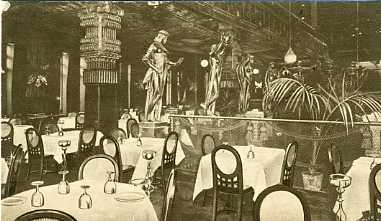
The interior was a startling demonstration of the transformative power of life-size statuary, concealed lighting, mirrored walls, and a million or so sheets of gold leaf. The electrical industry was thrilled with the restaurant’s flair for showcasing what miracles modern lighting could perform. But the architectural community was rather scandalized. They hid their distaste in a haze of apparent flattery, producing choked praise in which adjectives like magnificent served as insults. The “lurid and gorgeous” restaurant was so overwhelming it could “overcome at once the more sober judgment of the critic,” claimed The Architects’ and Builders’ Magazine.

The restaurant’s dining rooms occupied four floors with its main kitchen located above them. Manager Henri Pruger, hired from the Hotel Savoy in London at the princely salary of $50,000 a year, oversaw a staff of 750. Six months after arriving in NYC he headed back home, and one can only wonder how much of his salary he managed to collect. Stern Brothers wasted no time seizing all the furnishings for auction but a goodly number of them apparently were acquired by the new owner, Louis Martin. A restaurant pro, he had formerly presided over the famed Café Martin at Broadway and 26th with his brother J. B.

Martin quickly made changes, moving the kitchen to the basement to solve the problem of food arriving cold at the tables as had happened under the previous management. He installed a bar on the first floor and eliminated the previous regime’s terrifically unpopular formal dress requirement, said to be an English notion. But the jinx was on. If ever a location reeked with bad omens, it was this. On opening night in December 1910 an employee of the Café de l’Opera started an accidental fire in a storeroom causing firemen to parade through the dining room with axes. Well, there was that foreboding fall of Babylon depicting invaders in the banquet hall. But what possessed Louis Martin to create a dining room lighted by a dozen perched owls with electrified eyes the size of silver dollars?

Martin, who ran the restaurant as Café Louis Martin, withdrew from the business in 1913. The new management renamed it the Café de Paris. On the color postcard shown here it is clear that the golden statues on the balcony are gone, replaced by flowers during this incarnation. In 1914 the Café de Paris went bankrupt and in February the restaurant’s “furniture, pictures, ornaments, rugs, carpets, curtains, linen, tableware, kitchenware, and other equipment and furnishings” were auctioned. The building was razed in 1915.

© Jan Whitaker, 2011

13 Comments

Filed under elite restaurants, night clubs, restaurant decor

White restaurants

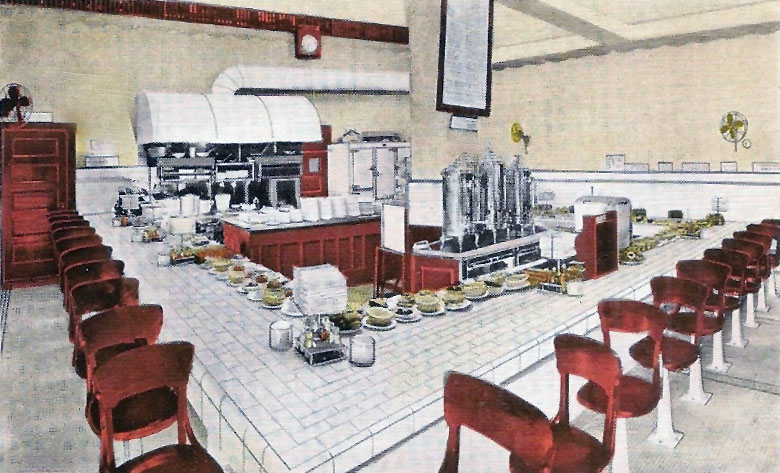
Whiteness in restaurants has had multiple dimensions. When it swept through the lunchroom industry in the early twentieth century the obvious intent was to denote cleanliness through the liberal use of marble and porcelain table tops and counters, and white tile walls and floors.

With names like White Kitchen, Sanitary Café, and Purity Cafeteria, large lunchrooms, led by the Childs’ and Thompson’s chains, advertised not only their cleanliness but their modernity and efficiency with ceramic tile, plate glass windows, and bright electric lights. They sent a message that they could not be more unlike “the old hole-in-the-wall lunch room, with its flickering lights, its smoky atmosphere, its greasy walls and sawdust carpeted floor,” according to Edison Monthly in 1911. Though the story didn’t say so, it’s likely readers would have associated the greasy old days with ethnic proprietors and the reign of the saloon-cum-eatery.

Marshall'sWhiteLunchTampa

White tile lunchrooms figured as heralds of modernity to critic Lewis Mumford. Although he found them noisy and sterile, he was impressed with their machine age provenance (“If one looks carefully at the floors, the cutlery, the tables, the chairs, and the rest of the fixtures one discovers that there is not an object in the place which is not a machine product.”). In “The Quick-Lunch Counter,” poet William Rose Benét selected them as an exemplary institution of the World War I era alongside movie theaters and skyscrapers, with the lines:
Then a sharp command.
And, starting up, I take in hand
My share of thick white china, holding
Limp bread some limper ham enfolding,
Brown doughnuts, and a liquid less so.
(They call it ‘coffee.’ Well, I guess so!)

At the same time as white tile was being installed to cover up the unsanitary wood beneath it, other kinds of whitenings were taking place in the emerging “quick lunch” marketplace. Demands by the public — made up of growing ranks of male and female white-collar office workers — for greater cleanliness brought rejection of waiters’ European-style black garb which gave way to white uniforms. Many of the wearers of white were women servers who replaced men, oftentimes black men who had long made up the bulk of America’s waiters.

And while white-tile lunchcounters were scarcely the only eating places to refuse service to black patrons, it should be noted that the chains’ progressive attitudes did not extend to equal treatment of everyone who came through their doors. In the same years that the Busy Bee outlets in Columbus OH replaced black waiters with white women the chain grudgingly seated black patrons in the rear of its shiny lunchrooms and charged them higher prices.

The frankly businesslike hustle and bustle of the white tile lunchrooms lost steam in the 1920s and came to a definite close with the Depression of the 1930s. The public had lost their distrust of restaurants and no longer demanded visible proof they were sanitary. But even more significant a reason for their decline was the wish for escape from the tedium and anxiety of everyday life. Bright colors and movie-set interiors became the new order of the day.

© Jan Whitaker, 2011

9 Comments

Filed under lunch rooms, restaurant decor

Theme restaurants: castles

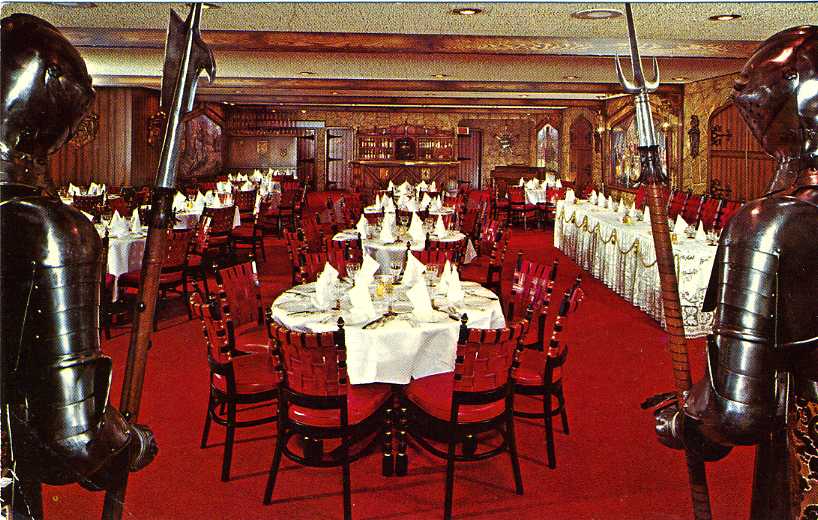
So often restaurant reviewers seem to struggle to say something positive about a restaurant. Is it my imagination or did they try twice as hard when reviewing restaurants with medieval castles and King-Arthur-and-his-knights themes? No doubt there were a handful of restaurants of this sort that really cared about food but, mainly, I think not. Of course most were actually steak houses in disguise — but what wasn’t a steak house around 1967, the year that the movie Camelot came out, almost certainly boosting this restaurant-ing trend?

In America Eats Out, John Mariani comments that during the 1960s many “strained and mawkish” restaurant themes prevailed. For example, he writes, “‘Old English pubs’ proliferated in places with names like Ye Olde Bull & Bush in Atlanta, The Golden Bee in Denver, and His Lordship’s in St. Louis. At Atlanta’s Abbey restaurant, waiters came to the table dressed as monks (a sartorial gimmick also featured at New York’s Monk’s Inn).”

The popular movie Camelot explains some but not all instances of medieval English resorts in this country. There were none in the 19th century that I’ve discovered, but a few can be found before the 1960s. I do not include White Castle hamburger stands. Despite their name and laughably minimal crenellated exteriors, they were so clearly not castles that they may be excused from consideration. They didn’t print menus on parchment scrolls, didn’t decorate with suits of armor, and didn’t dress countermen in monks’ robes or velveteen rompers with tights. As others have commented, White Castle interiors looked more like morgues than baronial halls. And while White Castles were sited near bus stops and factory gates, only a novelist like Vladimir Nabokov could have created the existential contexts for English castles: The Coat of Arms on Oracle Blvd. in the Casa Adobes Plaza; the Camelot Castle, a smorgasbord in Azusa CA; King Arthur steaks in Long Beach.

knightCrownRoomSheratonMotorHotelNYC

Back in the 1920s entrepreneurs in Los Angeles were knocking together roadside castles – and windmills, Irish shanties, French Bastilles, giant igloos, anything that would catch the eye of a speeding motorist. It may have been a similar motive that led to the ca. 1920s erection of a castle in Westhampton, Long Island, once the home of the Gray Lion Tea House (another medieval castle would spring up in a Valley Stream shopping center in the mid 1960s housing a unit of the Steak Pub chain). The 1939 Chicago World’s Fair occasioned many theme restaurants including The Hunting Lodge, an English castle whose guests were attended by young women dressed as Robin Hoods.

Quite unlike White Castles’s tiny beef patties, Olde English castles encouraged “royal” self-indulgence, designed principally for male guests. Stiff drinks in front of the roaring fire, the color red, chunky chairs, cheese crocks, T-bone steaks, jumbo shrimp, and oversize desserts were typical of these castles.

The proliferation of restaurants of this type in the 1960s makes me think that it took a lot of coaxing to get men to go out to dinner in that decade.

© Jan Whitaker, 2011
2 Comments

Filed under restaurant decor, theme restaurants

Dining in shadows

Until electricity became common no one thought dining by candlelight was the least bit romantic. In the later 19th century any restaurant that acquired electricity made a big bragging deal of it. A Chicago restaurant called The New York Kitchen boasted in 1888 that its dining room was “brilliantly lighted by the Mather Incandescent Electric System.” In the early 20th century going places with bright light was fashionable, especially because it turned restaurants into stages on which to be seen and to covertly stare at others.

But there were some ultra-refined people who considered the glare of bright light vulgar. Etiquette expert Emily Holt recommended in1902 that candles be used instead of gas or electric chandeliers for home dinner parties lest the dinner resemble a “blazing feast … in some hotel restaurant.” At that time restaurant patrons who wanted mellow light could choose a place such as Sherry’s in New York where wall sconces gave off gentle illumination and candles topped by artistic shades reposed on each table. So private! So French!

Candlelight promised the gentility of an elite dinner party, far removed from loud music, noise, and guests who drank too much. Candles suited the tea room perfectly. Not only did they shed flattering light, they discouraged the rowdy, fun-seeking masses from entering the door. Tea room owners, overwhelmingly WASPs, also liked how candles, as well as lanterns and fireplaces, created a quaint atmosphere that they imagined resembled how their Colonial ancestors lived.

In Greenwich Village some tea rooms of the 1910s used candles exclusively. The homey Candlestick Tea Room was described as “a little eating place chiefly remarkable for its vegetables and poetesses.” Like other tea rooms lit solely by candles it was undoubtedly atmospheric, but its owners Mrs. Pendington and Mrs. Kunze probably had a more basic reason for using candles. Many of the substandard Village buildings had no electricity. Nonetheless candles did not guarantee respectability. In Chicago, police declared the candle-lit Wind Blew Inn disreputable. A dilapidated, Bohemian student hangout, it had only three candles lighting its two floors.

Outside of Bohemian haunts, though, candles in tea rooms continued to suggest quiet good taste. Alice Foote MacDougall pronounced in her 1929 book The Secret of Successful Restaurants that “Tea time is relaxation time and lights are softened, candles lighted, music plays softly, accompanied by the rippling measure of water falling from our fountains.” She spent the considerable sum of $10,000 a year on candles in her tea rooms. In the 1930s genteel shoppers at Joseph Horne’s in Pittsburgh enjoyed tea and cake by candlelight while listening to organ music in the department store’s tea room.

Today candles are so common in restaurants that they are scarcely noticed, yet as recently as 50 years ago they were considered feminine tools of romantic entrapment. A kind of low-level warfare simmered through the 1950s and early 1960s in which women such as Patricia Murphy of the Candlelight Restaurant in Yonkers announced that wives could save their marriages with candle-lit dinners, while men countered they “liked to see what they were eating.” In 1962 a fire official in Beverly MA said that his ban against candles in restaurants was not motivated by a dislike of dining by candlelight but a need to protect the public from “open flames.” But change was on its way. In the 1970s millions of Americans, male and female, would flock to restaurants where they sipped wine while candles flickered against exposed brick walls.

© Jan Whitaker, 2010

2 Comments

Filed under restaurant customs, restaurant decor

Birth of the theme restaurant

brasseriedeL'enfer86

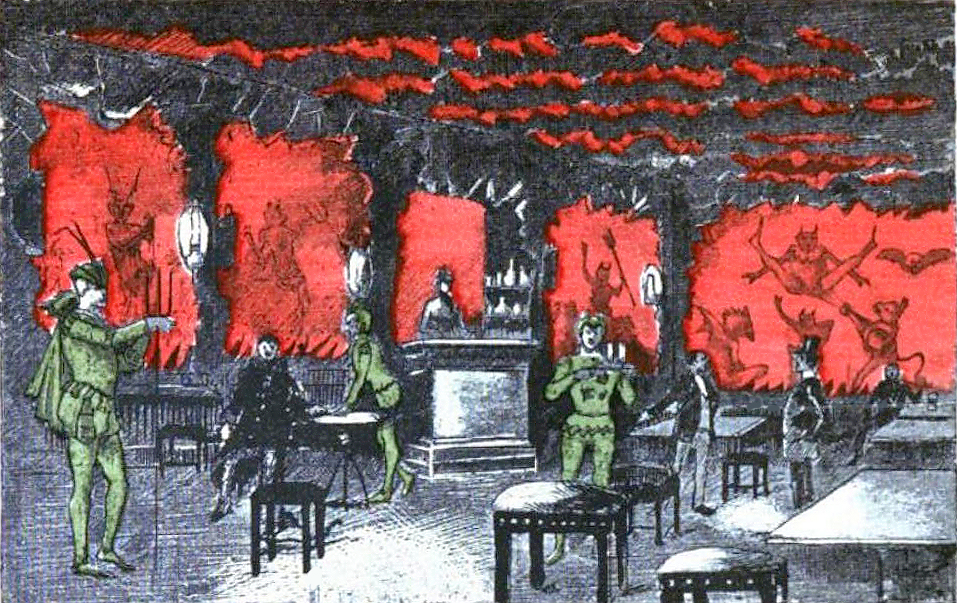
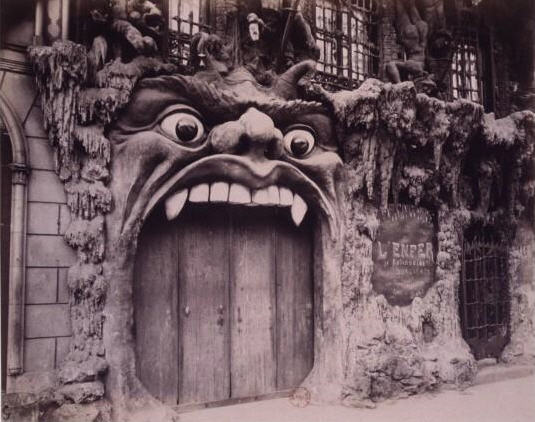
Credit for the development of the first theme restaurants goes to Paris cafés and cabarets which opened in Montmartre in the later nineteenth century. They were primarily drinking spots rather than full-scale restaurants but they served food also. Like American theme restaurants today they were built around a concept and created an environment which appeared to be something other than a mere eating and drinking place.

In their early years these artistic cafés had a counter-cultural impetus that in some cases celebrated the revolutionary Paris Commune of 1871 which had been rooted in Montmartre.

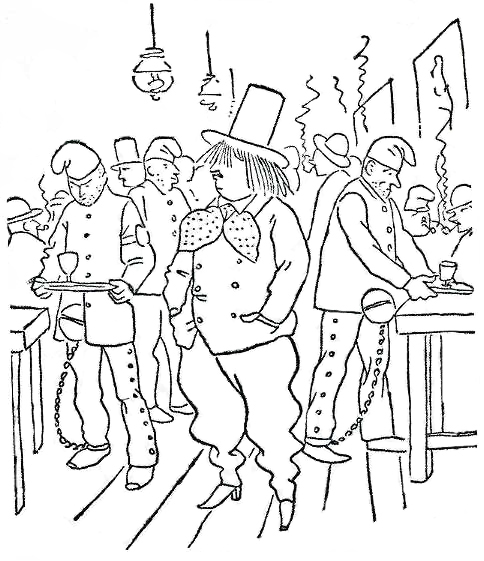
That was particularly true of the Café du Bagne (Café of the Penitentiary) established in 1885 by Maxime Lisbonne (shown with waiters), a member of the Commune long exiled in a South Pacific penal colony. Posters on the wall of his café, which replicated a prison eating hall, hailed Commune heroes. Waiters were dressed as real convicts but with fake balls and chains. The place caused an instant sensation when it opened, with patrons lining up outside to get in. Possessed of a socialistic mission, Lisbonne posted a sign in 1886 announcing a free breakfast for the poor residents of Montmartre: “Come, and eat your fill, your appetite sharpened by the knowledge that it was from their [the capitalists] coffers the money was extracted.”

The Chateau d’If’ of the 1880s, possibly an imitator of the Café du Bagne, was designed to resemble the prison by the same name in Dumas’s The Count of Monte Cristo. Outside it had an imitation drawbridge which stretched from the street to a large oak door, while inside were cells and dungeons. The L’Abbaye de Thélème, with a medieval theme, dressed its servers as monks and nuns.

At Le Chat Noir, the decor was in Louis XIII style, with waiters dressed in the authentic green jackets of the Immortals of the French Academy whose job it was to protect the purity of the French language – the object being, of course, to mock them. When it was established in 1881, Le Chat Noir, which was also decorated with images of black cats throughout, served as a club for artists where they exhibited their work. Its fame spread quickly and it became a magnet for visitors to Paris. (Later incarnation of Le Chat Noir pictured below.)

cabaretduneant

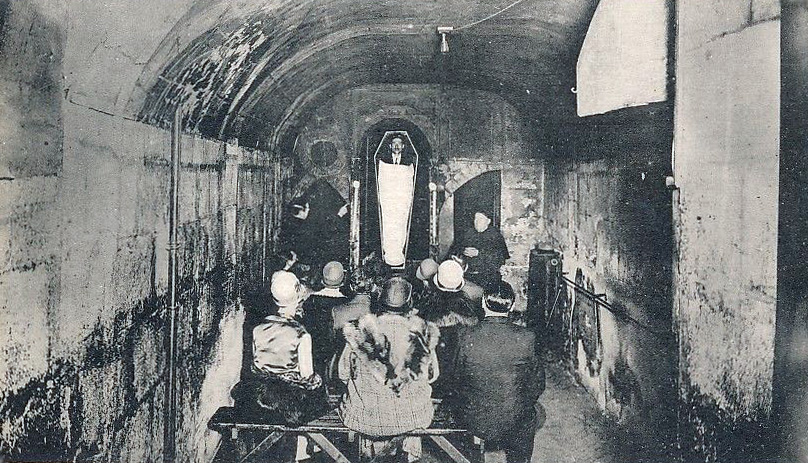
Many of the Montmartre cafés celebrated the macabre, with paintings and decor whose subjects included infanticide, crucifixion, and assassination, but in 1894 The Café of Death opened, furnished with coffins serving as tables. The police objected to its name and its habit of serving beer in imitation human skulls so its name was changed to the Cabaret du Néant [of Nothingness] (see above).

The 1890s marked a turning point at which original owners left the scene, artists stopped coming, bohemianism vanished, and new café owners took dead aim at tourists. Certainly few of the popular cafés and cabarets of the early 20th century had much connection with earlier enterprises even when old names remained. Many felt that the Café de l’Enfer (Café of Hell) exemplified the purely commercial type of enterprise.

chatnoirclichy401

The spirit of Paris’s bohemian cafés passed into the United States first in New York City. Au Chat Noir was in business there in 1895, decorated with a wall frieze of black cats. Otherwise, though, it seemed like a fairly standard small French restaurant of the day serving dishes such as cold lobster, tripe, and deviled crabs. Later at least a couple of other cafés named The Black Cat appeared in NY and Coppa’s in San Francisco adopted a similar theme.

Other early theme restaurants undoubtedly inspired by Paris cafés include beefsteak dungeons in New York and elsewhere, as well as tea rooms and cabarets in Greenwich Village both before and after World War I, a prime example being the Pirates’ Den. As in Paris, theme restaurants and cafés rapidly lost any counter-cultural overtones.

© Jan Whitaker, 2010

12 Comments

Filed under Offbeat places, restaurant decor, theme restaurants

Theme restaurants: barns

At the risk of offending anyone I have to say I find this one of the worst themes ever. I almost feel I don’t need to elaborate, that everyone is thinking “I agree.” Not only is the decor corny and the “atmosphere” non-existent, but the kitchen is usually totally lacking in ambition if not turning out food that is downright bad.

The 19th century was mercifully unafflicted with barn restaurants, presumably because barns were still needed for farming and restaurants that were more than plain, bare-bones eateries tended toward grandeur. Sometimes the grandeur was hokey but at least the aim was to provide guests with an experience that went beyond eating in a shelter designed for animals and fowls. Though theme restaurants weren’t totally unknown, the past had not yet been ransacked to come up with novelties that would attract jaded patrons looking for “something different” or catch the eye of passing motorists.

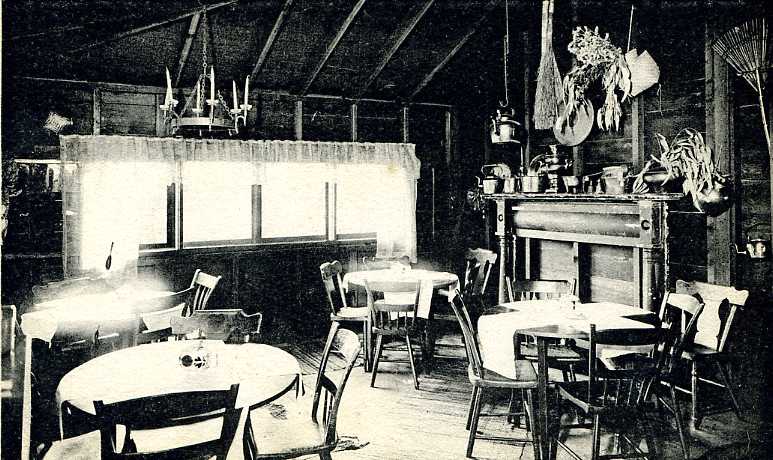
Barn themes were usually used to attract men. I’m guessing it was because subliminally they seemed to promise large quantities of food while not demanding overmuch etiquette. Some beefsteak dungeons, as they were called, where men ate steaks with their bare hands in basements of hotels and restaurants, adopted barn themes. Occasionally even tea rooms, supposedly appealing to discriminating women of delicate tastes, were tucked away in barns in the 1920s (Hyannis Tea Barn pictured). Men tended to avoid tea rooms, so a 1924 tea room trade journal suggested adopting a barnyard theme to draw them. A headline read “The Barnyard Lunch Shows How to Win and Hold Masculine Patronage.” Oof.

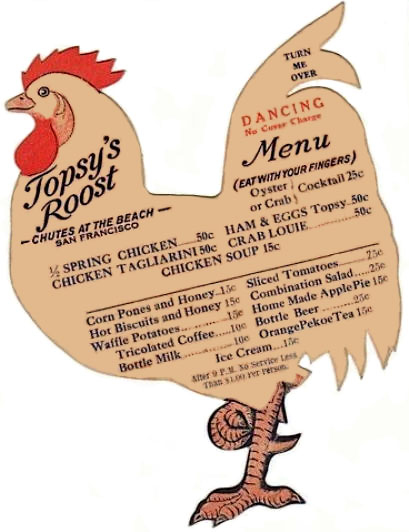
The nightclub and restaurant “renaissance” which occurred in 1933 right after the repeal of Prohibition inspired a host of barn eateries as well as many other kinds of theme restaurants. Many were night spots for drinking and dancing as well as “dining.” Examples included the Village Barn in Greenwich Village, as well as Topsy’s Roost near San Francisco which after Repeal relocated to a larger barn equipped to service over 1,000 merry imbibers at once. At Topsy’s, rooster images decorated the walls while chicken prints crossed the table tops. Is anyone thinking sucker joint?

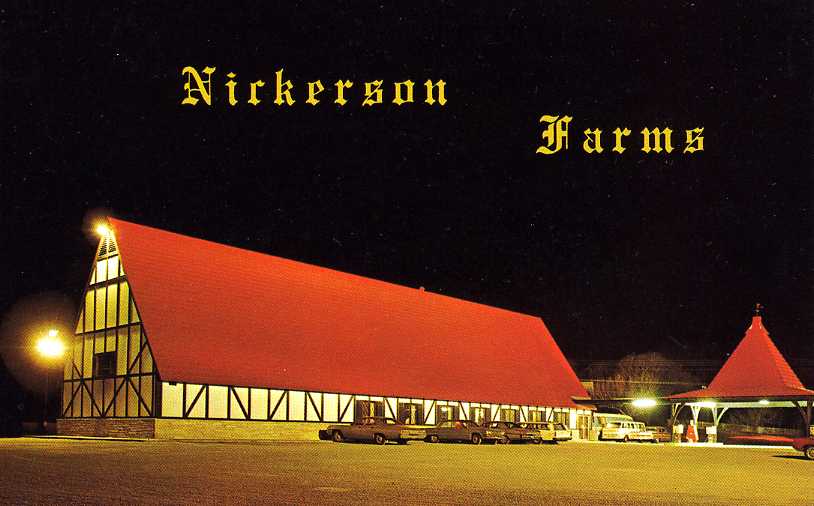
The 1960s and 1970s saw another spate of barn restaurants, this time chains such as Red Barn and Nickerson Farms, which actually constructed barn-shaped buildings as restaurants. And some people loved them.  And pine over them even today.

© Jan Whitaker, 2010

6 Comments

Filed under odd buildings, restaurant decor, theme restaurants

Decor: glass ceilings

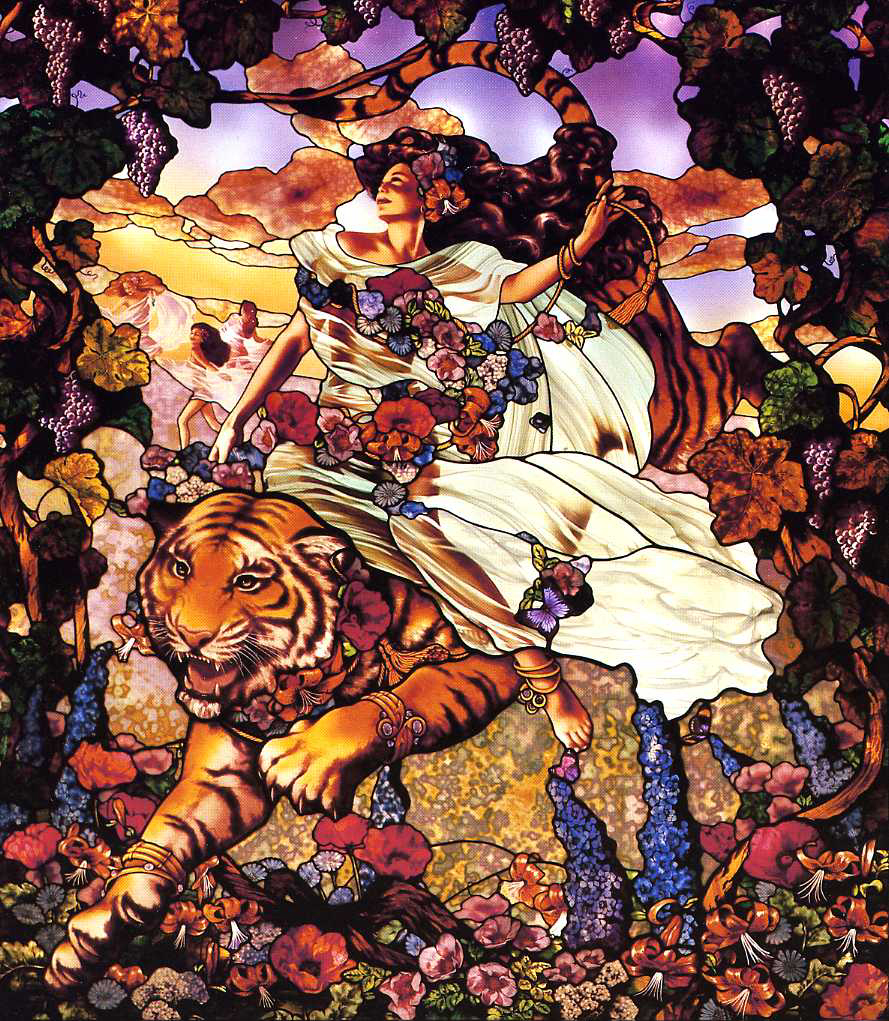
There are a couple of reasons why I’ve been thinking about glass ceilings in restaurants this week. I took a look at the total number of visits to my top posts and, apart from the various Taste of a decade posts which draw a lot of traffic, Swingin’ at Maxwell’s Plum is #1. An elaborate stained glass ceiling was one of the most striking features of Maxwell’s Plum in New York City, and also at the San Francisco Plum (pictured) which opened in 1981.

The second reason is that last Sunday I went to the antique paper show Papermania in Hartford CT and bought a 1970s-era menu from a pizza restaurant in St. Louis that I used to go to but had forgotten all about. It too had a glass ceiling though, as I recall, it was fairly plain. I won’t name the restaurant but will say that it was located in the vicinity of Washington University where I went to graduate school and there was a second place in Creve Coeur.

On one occasion I went to the city location with a group of friends and we witnessed a kind of free floor show – only it took place inside the glass ceiling. We heard the sounds first, of little claw feet scratching on glass. Then we looked up. We saw silhouettes of a legion of four-footed creatures with long tails which were furiously scrimmaging above us, as though playing a game of football. We laughed, considered leaving, but ended up staying. If the management noticed anything amiss they certainly didn’t show it. No one came over to explain away the incident (not that I know how you’d do that), no one offered us free drinks, nothing!

The menu from this restaurant which I just acquired displays on its cover a pledge of quality accompanied by the signature of the restaurant’s owner. One of the sentences jumps out at me: “More ingredients go into our pizza than the normal recipe calls for.” Yikes, say no more!

© Jan Whitaker, 2010

6 Comments

Filed under restaurant decor