Author Archives: Jan Whitaker

Jan Whitaker's avatar

About Jan Whitaker

A frequent restaurant patron who knows a lot of fascinating things about the history of American restaurants based on years of research, and who is also interested in how people relate to food, what it means to them, and how they form memories about meals in the past. I started my blog in 2008 (!) and by now have a huge number of posts. The early ones are just as good as the new ones, so look around.

Righting civil wrongs in restaurants

This year marks the 50th anniversary of the Woolworth’s lunch counter sit-ins in Greensboro NC (pictured) which set off a wave of similar protests across the South and turned the tide against segregated eating facilities. But these were far from the first such actions. Integration of American eating places came about from a patchwork of regulations that sometimes successfully impeded discrimination and by the courageous actions of individuals and groups, black and white, who negotiated with, sued, picketed, and physically occupied restaurants beginning in the 1870s.

The Civil Rights Act of 1964, which offered the strongest protection against discrimination in restaurants up to then, was neither sudden nor was it evidence of the steady march of progress. A federal Civil Rights Act of 1875 was repealed by the Supreme Court just eight years later, after which Southern states enacted separate accommodations laws (Jim Crow), while other states passed or amended civil rights acts.

Few state civil rights laws covered eating facilities, the most controversial area of public accommodations. White public opinion was strongly against blacks and whites eating together in restaurants. Segregationist sentiment grew stronger around the turn of the last century and again in the World War I period when many black Americans migrated North for jobs. Blacks lodged relatively few protests because the odds of winning in court were poor. Also, anyone brave enough to challenge discrimination needed enough social stature to refute the accusation of simply being a low-class ruffian. By the “Catch-22″ logic that long prevailed, any black person who went into a white-only restaurant was considered of poor character since proper black people knew better than to go where they were not wanted.

The following are examples of challenges against racism in restaurants that nevertheless occurred in the 20th century before passage of the Civil Rights Act of 1964.

1926 Organized by a cook, the black staff of an Alice Foote MacDougall tea room in NYC unites behind a black waitress discharged for serving a black customer. They all walk out, forcing MacDougall to change her policy.

1929 The president of the United Colored Socialist party is accosted by a waitress as he and a black associate enter the Mills Restaurant in Cleveland. Restricted to a table on the mezzanine, they are treated hatefully and a hefty service charge is added to their bill. They win in court after refusing to give up despite six postponements.

1935 Black activists test a new PA civil rights law in Philadelphia, leading to the arrest of four employees at Horn & Hardart’s Automat who seat five white parties while two black people stand by and wait for an hour. At Stouffer’s three black patrons receive their meals smothered in salt. The manager asserts that all Stouffer’s meals are “highly seasoned.”

1936 After two black New Yorkers are refused service at a restaurant in Bel Air MD, 17 bus loads of fellow (but white) WPA workers en route to a Washington conference protest. The demonstration is peaceful yet 40 state police armed with machine guns and tear gas arrive and arrest the two blacks.

1943 Howard University students sit-in at a “white trade only” eatery in DC, a city in which few restaurants are open to people of color including the cafeteria in the Department of Justice.

1943 The newly formed Congress of Racial Equality (CORE) initiates a sit-in at the Jack Spratt café in Chicago where one of CORE’s founders, executive director James Farmer (pictured in 1965), had been treated rudely the previous year.

1946 The United Packinghouse Workers union (CIO) files charges against Hackney’s Seafood restaurant in Atlantic City on behalf of two black delegates refused admittance and files false-arrest charges against the police department which arrested protesting union picketers.

1947 After 11 bias suits against Bullock’s department store in Los Angeles fail to alter the store’s discrimination policy, CORE initiates sit-ins in the store’s tea room. Several white bystanders join the protest by informing waitresses they will wait to be served after the black patrons.
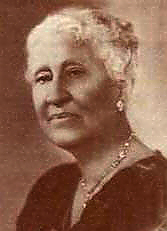
1951 Long-time civil rights activist Mary Church Terrell (pictured), in her late 80s and using a cane, joins picketers in front of Washington DC’s Hecht’s department store, which does not permit its many black customers to use its cafeteria. The store changes its policy in 1952.

1958 Dime store lunch counters are integrated in Louisville KY after unpublicized sit-ins, but other restaurants continue to refuse to serve blacks.

1960 Martin Luther King is among the 51 protesters arrested at the famed Magnolia Room at Rich’s Department store in Atlanta. A few months later the store changes its policy.

1964 As passage of the bill nears in the House, Ku Klux Klan members sit-in at a Krystal Hamburger stand in Atlanta to prevent SNCC (Student Nonviolent Coordinating Committee) members from occupying it.

Read more about discrimination in American restaurants.

© Jan Whitaker, 2010

1 Comment

Filed under racism

Theme restaurants: barns

At the risk of offending anyone I have to say I find this one of the worst themes ever. I almost feel I don’t need to elaborate, that everyone is thinking “I agree.” Not only is the decor corny and the “atmosphere” non-existent, but the kitchen is usually totally lacking in ambition if not turning out food that is downright bad.

The 19th century was mercifully unafflicted with barn restaurants, presumably because barns were still needed for farming and restaurants that were more than plain, bare-bones eateries tended toward grandeur. Sometimes the grandeur was hokey but at least the aim was to provide guests with an experience that went beyond eating in a shelter designed for animals and fowls. Though theme restaurants weren’t totally unknown, the past had not yet been ransacked to come up with novelties that would attract jaded patrons looking for “something different” or catch the eye of passing motorists.

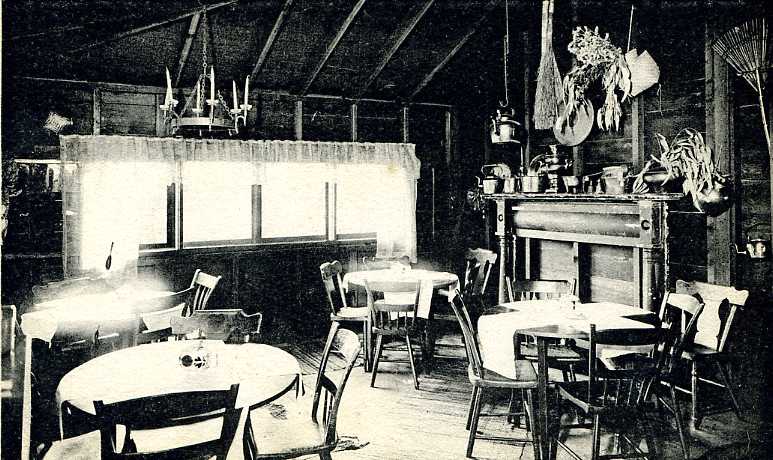
Barn themes were usually used to attract men. I’m guessing it was because subliminally they seemed to promise large quantities of food while not demanding overmuch etiquette. Some beefsteak dungeons, as they were called, where men ate steaks with their bare hands in basements of hotels and restaurants, adopted barn themes. Occasionally even tea rooms, supposedly appealing to discriminating women of delicate tastes, were tucked away in barns in the 1920s (Hyannis Tea Barn pictured). Men tended to avoid tea rooms, so a 1924 tea room trade journal suggested adopting a barnyard theme to draw them. A headline read “The Barnyard Lunch Shows How to Win and Hold Masculine Patronage.” Oof.

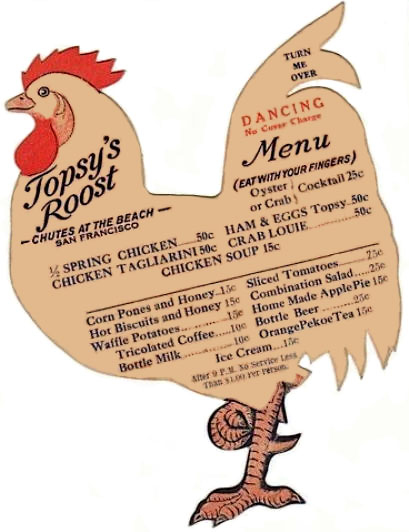
The nightclub and restaurant “renaissance” which occurred in 1933 right after the repeal of Prohibition inspired a host of barn eateries as well as many other kinds of theme restaurants. Many were night spots for drinking and dancing as well as “dining.” Examples included the Village Barn in Greenwich Village, as well as Topsy’s Roost near San Francisco which after Repeal relocated to a larger barn equipped to service over 1,000 merry imbibers at once. At Topsy’s, rooster images decorated the walls while chicken prints crossed the table tops. Is anyone thinking sucker joint?

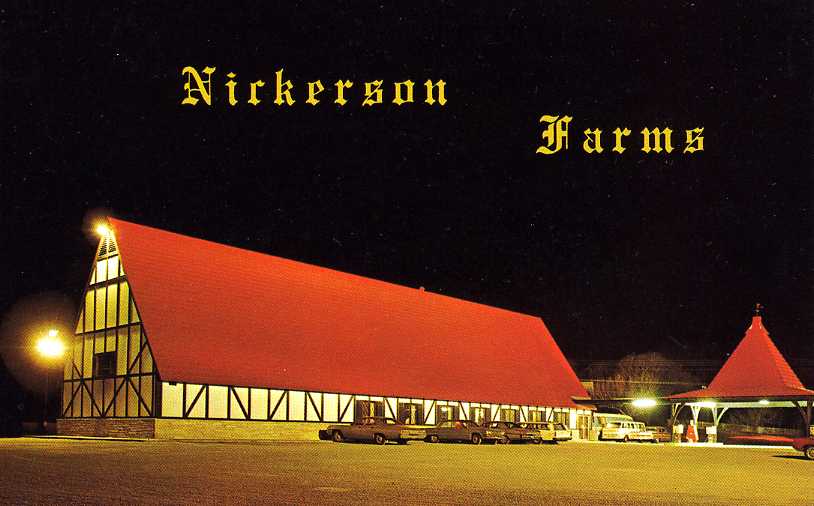
The 1960s and 1970s saw another spate of barn restaurants, this time chains such as Red Barn and Nickerson Farms, which actually constructed barn-shaped buildings as restaurants. And some people loved them.  And pine over them even today.

© Jan Whitaker, 2010

6 Comments

Filed under odd buildings, restaurant decor, theme restaurants

Men only

Men’s grills were often located in hotels or were set off as special preserves in venues heavily trafficked by women such as tea rooms and department stores. Schrafft’s, Stouffer’s, Mary Elizabeth’s, Marshall Field’s all featured men’s grills. Designed to resemble clubs, they were decorated in Elizabethan or Dutch style with dark wood paneling and sturdy tables and chairs, in stark contrast to the pastel garden look of women’s tea rooms. Women secretly referred to men’s grills as “tea rooms for men.”

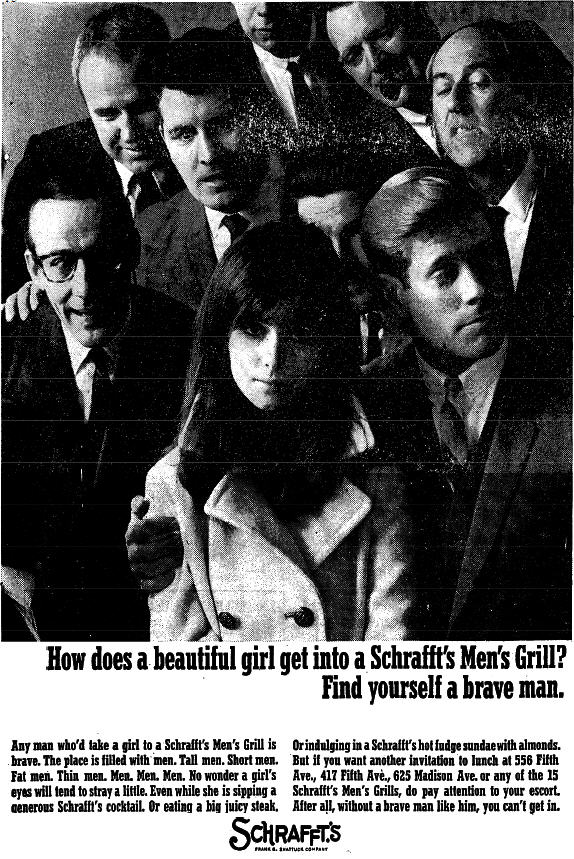
There were plenty of grill-type restaurants in the 19th century – when they needed no gender preface because everyone knew they were men’s haunts. But in the 20th, with more women out and about and entering restaurants willy nilly, the words “men’s grill” were used deliberately lest a misguided female might wander in. Policies varied. In some men’s grills absolutely no women were allowed while in others men could bring women guests (see 1966 Schrafft’s ad). But women “alone” were not admitted. Not until the 1970s, that is.

In May 1970 a prominent NYC editor, a woman, walked into Schrafft’s on the corner of 47th Street and Third Avenue with another woman. They noticed that at the back of the restaurant there was a section that looked especially attractive, with more space between tables, tablecloths, and carpeting that cushioned noise. The hostess told them it was the men’s grill and they were not permitted to eat there. They left. The editor sent a letter to Schrafft’s saying that although she was no “stirred-up advocate of Women’s Lib,” she was offended by the restaurant’s policy which, she asserted, was illegal. She received a reply from a Schrafft’s VP who said that the restaurant no longer had a policy of reserving some areas for men. The hostess’s reaction, he said, was due to a breakdown of communication.

Stuffy as they may have been there was much to envy about men’s grills. As a Chicago woman remarked, they had “fast service, good food, and cheaper prices than a comparable restaurant.” She and a woman friend crashed the men’s grill at the Carson, Pirie, Scott department store in Chicago, noting that a male patron there asked the hostess, “Why don’t you throw them out?” They enjoyed their lunch even though their waitress said, “Don’t you know men come here to get away from you?”

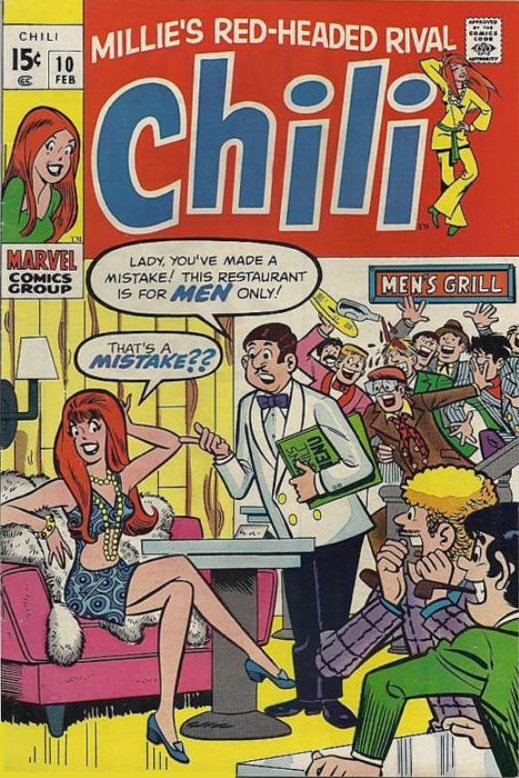
The 1964 Civil Rights Law did not mention gender as a basis for discrimination in public accommodations, but after its passage some cities and states enacted laws that forbade it in restaurants and bars. Chicago passed legislation in 1969. McSorley’s ale house in Greenwich Village, with a 116-year tradition of serving men exclusively, gave way in 1970 after the NY city council passed a bill. Even in states without this legislation changing social mores soon brought about new policies. Men’s grills disappeared, to the consternation of some men who, like the lone dissenter on NY’s city council, lamented, “In this troubled world there has to be an oasis in the desert for men.” However, judging from a 1970 comic book, many men disagreed.

© Jan Whitaker, 2010

13 Comments

Filed under women

Taste of a decade: restaurants, 1900-1910

It is the dawn of the modern era of restaurant-ing. Patronage grows at a rate faster than population increases and the number of restaurant keepers swells by 75% during the decade. Leading restaurant cities are NYC, Philadelphia, Chicago, San Francisco, and Boston. Inexpensive lunch rooms with simple menus and quick service proliferate to serve growing ranks of urban white collar workers, both male and female. Women patronize places they once dared not enter, climbing onto lunch counter stools and venturing into cafes in the evening without escorts.

Diners worry about food safety and cleanliness. Cities mandate restaurant inspections. Meat preservatives used by some restaurants to “embalm” meat that has spoiled come under attack. Restaurants install sanitary white tile on floors and walls to demonstrate cleanliness.

Cooks and waiters unionize. Restaurant owners follow suit, advocating the abolition of the saloon’s “free lunch,” combating strikes, and targeting immigrants who operate “holes in the wall.” As Italians and Greeks open eating places some native-born Americans complain that foreigners are taking over the restaurant business.

New types of eating places become popular such as cafeterias, vegetarian cafés, German rathskellers, tea rooms, and Chinese and Italian restaurants. Dining for entertainment spreads. Adventurous young bohemians seek out small ethnic restaurants (“table d’hotes”) which serve free carafes of wine. Many restaurants introduce live music. The super-rich are accused of “reckless extravagance” as they stage elaborate banquets. The merely well-to-do hire chauffeurs to drive them to quaint dining spots in the countryside.

Highlights

1901 As restaurant patronage rises “foody talk” is everywhere. A journalist overhears people “shamelessly discussing the quantity and quality of food which may be obtained for a given price at the various restaurants.” Hobbyists begin collecting menus and Frances “Frank” E. Buttolph deposits over 9,000 menus in the NY Public Library.

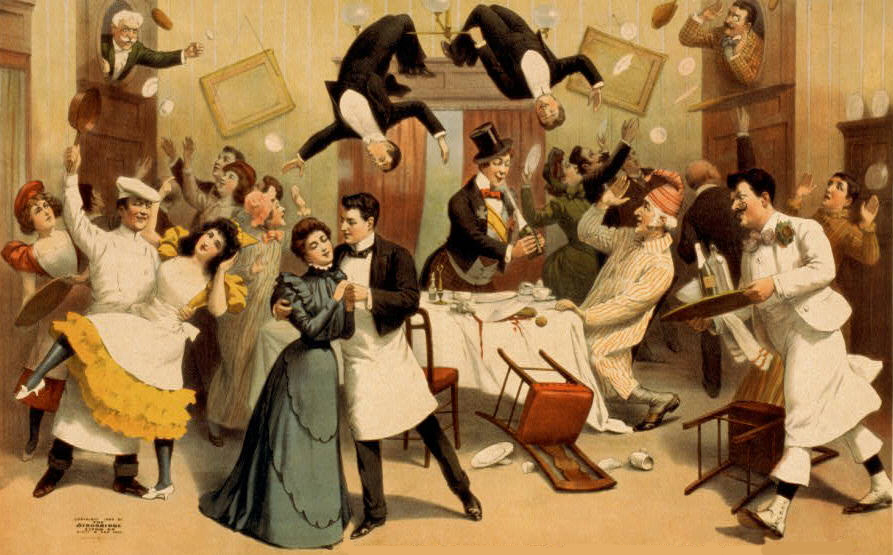
1902 Restaurants automate and eliminate waiters. In Niagara Falls a restaurant devises a system of 500 small cable cars which deliver orders to guests. The Automat opens in Philadelphia, inspiring the city’s Dumont’s Minstrels to create a vaudeville act called The Automatic Restaurant which features “Laughing Pie” and “Screaming Pudding.”

1903 “Where and How to Dine in New York” lists restaurants with cellars where men’s clubs play cavemen and eat steak with their hands. – Hawaiians croon in San Francisco restaurants; ragtime bands play in NYC’s Hungarian cafés; and at McDonald’s (“a touch of Bohemia right in the heart of Boston”) a “Young Ladies’ Orchestra” serenades patrons.

1903 In Denver, where a large part of the population eats out, a cooks’ and waiters’ strike closes large eating places. Strikes break out in Omaha and in Chicago, where a newly formed union rapidly gains 17,000 members. Restaurant owners replace black servers with white women in Chicago, while in Omaha they replace white waiters and cooks with black men.

1905 Five hundred guests of insurance magnate James Hazen Hyde don 18th-century costumes and enjoy a banquet at Sherry’s. Two floors of the NYC restaurant are transformed into a royal French garden and supper is served at tables under wistaria-covered arbors set on a floor of real grass.

1906 Afternoon tea is so fashionable that NYC’s Waldorf-Astoria supplements the Waldorf Garden space by opening the Empire Room from 4 to 6 p.m. – Italian-Americans Luisa and Gerome Leone start a small table d’hote restaurant in NYC near the Metropolitan Opera.*

1908 Johnson’s Tamale Grotto is established in San Francisco with “A Complete Selection of Mexican Foods to Take Home.” – In Washington, D.C., the Union Dairy Lunch advertises that they have passed inspection with “Everything as sanitary and clean as your own home.”

1909 The Philadelphia Inquirer features a story about stylish yet practical “restaurant frocks,” showing a coral pink dress and matching hat ideal for traveling in dusty, open automobiles while visiting rural roadside inns and tea rooms.

* Later known as Mamma Leone’s.

© Jan Whitaker, 2010
Read about other decades: 1800 to 1810; 1810 to 1820; 1820 to 1830; 1860 to 1870; 1890 to 1900; 1920 to 1930; 1930 to 1940; 1940 to 1950; 1950 to 1960; 1960 to 1970; 1970 to 1980

6 Comments

Filed under miscellaneous

Celebrating restaurant cuisine

“Recherché viands.” “Splendid appurtenances.” “Bibular veritabilities.” Wonderfully novel words of praise have been spun by proprietors, patrons, and reviewers in praise of restaurants and their fare. Although the modern era produces few phrases so elaborate as those before the Civil War, the examples below show there are no end of restaurant features that can be lauded.

1816 The owner of the Town and Country Refectory in Providence promises his meats and liquors are “calculated to make glad the heart of man, to revivify exhausted nature, to restore the valetudinarian to health, and to refresh the weary traveller.”

1838 A patron says of a dinner at the American and French Restaurant, Washington DC: “…it was one of the most splendid entertainments ever served up at a public house in the United States, and I much doubt whether the London Tavern, the Café de Paris, the Rocher de Cancale, or any other restaurant or hotel in Paris or London ever surpassed it, either in the qualities of sumptuous and recherché viands, splendid appurtenances, or fine wines.”

1855 Touting Shelley’s Restaurant Sans Pareil, NYC, a notice says “Gentlemen curious in gastronomy, and choice in their selection of Epicurean Varieties and bibular veritabilities, must of necessity visit this classically chaste Palazzo, sooner or later.”

1878 Tony Faust’s Café and Oyster House, St. Louis, claims to be where people can “enjoy the finest oysters ever introduced into this market; delicate brook trout, the most delicious wines, the excellent Anheuser beer, a fragrant cigar, or any of those palatable and delicious articles which make our appetites so vigorous and unruly.”

1896 At a small Brooklyn restaurant run entirely by women, a diner is dazzled by its graham bread, which “recalls the hasheesh of Monte Cristo, or the most entrancing story you ever read of the effect of opium. After the first taste you think you’ve found a new kind of nut, the sweetest ever known.”

1921 A Chicago tea room prefers cultured guests and claims “you will observe, seated about the blue tables at Le Petit Gourmet, discerning men and women, who delight in having found a dining room where the cuisine of the most celebrated continental cafes has been equalled.”

1930 At Trotsky’s, 155 West 35th Street, NYC, Hyman Trotsky (brother of Leon*) runs a restaurant “where unusually good food and a strict observance of the dietary laws goes hand in hand!” No butter is served with the meals and “the waiters delight in sassing you back.”

1936 According to its management, the mission of the Riviera Restaurant in San Francisco is to introduce “The famous foods and glamorous environment … of romantic Cannes, Nice, Monte Carlo, San Remo, Genoa! Tempting dishes, delightfully different menus, prepared by a master chef!”

1949 At Karl Ratzsch’s “old world restaurant” in Milwaukee, the management asserts “our Guest-Book proves that World Celebrities flock to us for their favorite Old or New World Dishes.”

1958 A columnist exclaims that L’Escoffier, in the Beverly Hilton, which brands the hotel “for all times as a gourmet’s paradise” is “the best expense-account spot in town.”

1961 In the Van Nuys CA area, The Quail bills itself as “The Gourmet Roadhouse – The Valley’s Most Elegant Secluded Twosome Restaurant.”

1969 Terry Lomax’s El Rancho in Amarillo TX advertises “All You Can Eat! A Wonderful World of True Authentic Italian Spaghetti Awaits You! Cooked the Old World Way. Truly a Gourmet’s Delight.”

1988 A reviewer writes of 72 Market Street, Venice CA, “The food is as wonderful as a perfect wave …”

* A reader has checked Leon Trotsky’s genealogy and found no sibling named Hyman, so it would appear the source I used for this was mistaken. The NY restaurant was, in fact, spelled Trotzky’s.

© Jan Whitaker, 2010

4 Comments

Filed under guides & reviews

Decor: glass ceilings

There are a couple of reasons why I’ve been thinking about glass ceilings in restaurants this week. I took a look at the total number of visits to my top posts and, apart from the various Taste of a decade posts which draw a lot of traffic, Swingin’ at Maxwell’s Plum is #1. An elaborate stained glass ceiling was one of the most striking features of Maxwell’s Plum in New York City, and also at the San Francisco Plum (pictured) which opened in 1981.

The second reason is that last Sunday I went to the antique paper show Papermania in Hartford CT and bought a 1970s-era menu from a pizza restaurant in St. Louis that I used to go to but had forgotten all about. It too had a glass ceiling though, as I recall, it was fairly plain. I won’t name the restaurant but will say that it was located in the vicinity of Washington University where I went to graduate school and there was a second place in Creve Coeur.

On one occasion I went to the city location with a group of friends and we witnessed a kind of free floor show – only it took place inside the glass ceiling. We heard the sounds first, of little claw feet scratching on glass. Then we looked up. We saw silhouettes of a legion of four-footed creatures with long tails which were furiously scrimmaging above us, as though playing a game of football. We laughed, considered leaving, but ended up staying. If the management noticed anything amiss they certainly didn’t show it. No one came over to explain away the incident (not that I know how you’d do that), no one offered us free drinks, nothing!

The menu from this restaurant which I just acquired displays on its cover a pledge of quality accompanied by the signature of the restaurant’s owner. One of the sentences jumps out at me: “More ingredients go into our pizza than the normal recipe calls for.” Yikes, say no more!

© Jan Whitaker, 2010
6 Comments

Filed under restaurant decor

Between courses: don’t sniff the food

Although most etiquette books seem to be directed at the female reader, S. A. Frost’s Laws and By-Laws of American Society published in 1869 appears to be aimed at men. Judging from the recommendations he makes below, there were some diners who sorely needed his advice if they didn’t want to be branded with “the certain mark of ill-breeding.”

In slightly abridged form, here are 10 big mistakes he identifies that you don’t want to make while at the table in a restaurant.

Don’t:

1. appear to question the quality or freshness of the viands by smelling or fastidiously tasting them.

2. [ever], even with cheese, put your knife into your mouth.

3. play with your knife and fork, fidget with your salt-cellar, balance your spoon on your tumbler, [or] make pills of your bread.

4. smack the lips when eating.

5. eat as if you had good fare for the first time in your life – that is to say, do not eat ravenously.

6. take the bones of fowl or birds up in your fingers to gnaw or suck on them.

7. wipe your finger tips, if soiled, upon your tongue or the table-cloth.

8. take a long, deep breath after you finish eating, as if the exercise had fatigued you.

9. suck your teeth, or pass your tongue round the outside of your gums.

10. illustrate your remarks by plans drawn upon the table-cloth with your nail, or butt of your knife, fork and spoon.

© Jan Whitaker, 2010
4 Comments

Filed under restaurant etiquette

In the kitchen with Mme Early: black women in restaurants

It’s so hard to find anything about the history of Afro-American women in restaurants that I decided to go ahead with a sketchy story rather than none at all. As far as the “historical record” goes, you’d be tempted to think that they had no place in restaurants. That’s certainly false, but they were frequently out of sight. The notice placed by John Kirk in a New York City paper sums up black women’s primary role in public eating places: as cooks and kitchen helpers. Kirk advertised in 1781, “Wanted to hire an active Negro Wench, used to a kitchen, with a good character.”

In his 1899 classic The Philadelphia Negro, W. E. B. Du Bois praised black men for their prominent place in the city’s catering business, writing of “self-reliant, original business men, who amassed fortunes for themselves and won general respect for their people.” He mentioned no women, yet there is reason to think that black women not only did much of the cooking in both black and white restaurants but ran many of the eating places in black communities too. They rarely made fortunes but surely must have commanded respect.

Although black women are nearly invisible in 19th-century documents, we see glimpses of them near its end. Several women ran Denver restaurants in the 1880s and 1890s, including Miss Jane Outland in the 1880s and at least six others in the 1890s, including Tennessee-born Callie Fugett who kept a restaurant on Market Street. In Washington D.C. in the late 1890s a former slave known as Madame Early provided chicken dinners in a cabin called the Café Du Chat Noir. I wonder if she was Haitian.

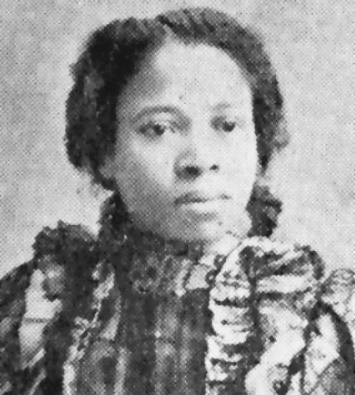
The first meeting of Booker T. Washington’s National Negro Business League in 1901 reported that women ran restaurants in Denver as well as Jacksonville and Tampa FL, including two in Tampa that were “among the best in the city.” A few years later, according to a directory of Afro-American businesses in Memphis, about half of the restaurants listed were run by women. Miss Lucy Hughes (pictured) ran the Climax Café and Ice Cream Parlor on N. Main where she sold “hot and cold lunches at all hours,” while residing with her mother, son, brother, and one male lodger who worked as a kitchen helper.

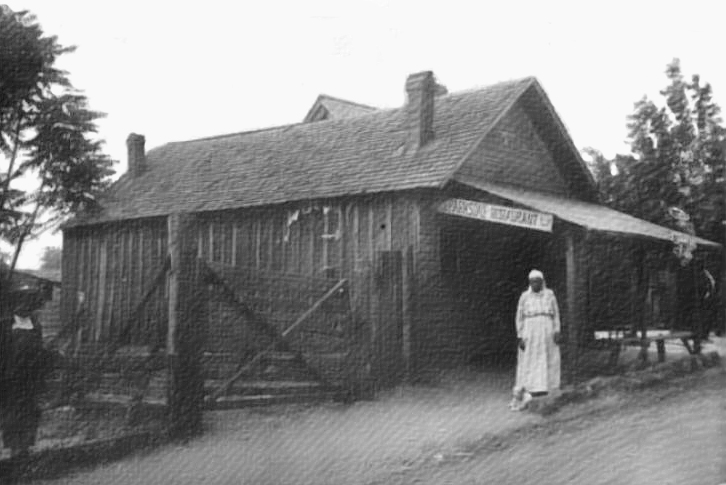
Overall, black women had even fewer employment opportunities than black men. The Department of Interior reported that in 1910 almost half of the 2 million employed black women were farm laborers. Private laundresses came next in the list, followed by cooks in private homes, hotels, and other settings. Only 2,734 women ran restaurants, probably humble eateries such as the one pictured here, one of four run by black business women in Gainesville GA ca. 1913.

After World War I things began to change in big cities. Middle-class black women opened fashionable tea rooms where they provided dainty lunches and hosted afternoon card parties. Chicago’s 1923 blue book of Afro-American society lists a number of these, such as Mrs. E. H. Hord’s Delmonico Tea Room on Prairie Avenue. In Pittsburgh, Mrs. A. E. Bush, a former pharmacy manager and wife of a prominent life insurance executive, opened the Melrose Tea Room which she decorated in old rose and blue. I have found no record of how black tea room operators dressed their black servers but I strenuously doubt they put them in mammy costumes as did so many white restaurateurs of the 20th century.

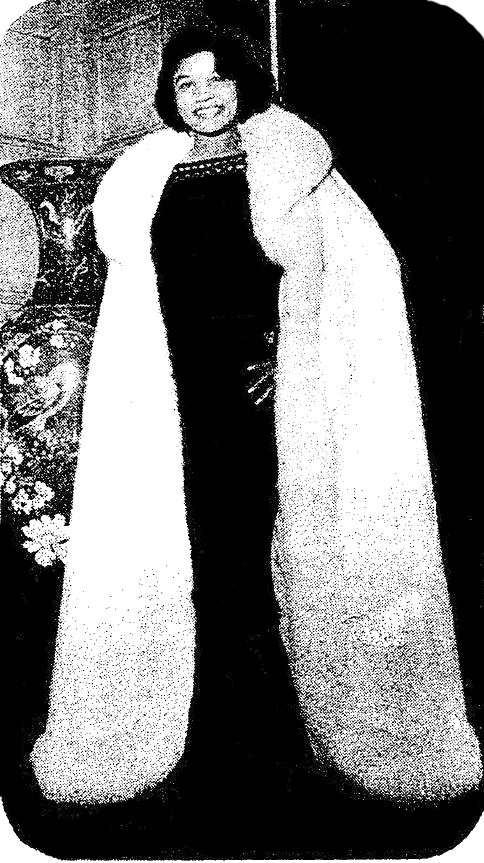
After the 1960s some black women who ran or cooked in restaurants acquired celebrity status. After her divorce, Helen Maybell opened the Soul Queen Café on Chicago’s near south side. In the 1970s the statuesque Helen (pictured), who was active in the NAACP and loved elegant gowns and furs, opened a second restaurant in which she hosted fashion shows. Leah Chase (who co-owned and cooked at Dooky Chase’s in New Orleans) and Edna Lewis (who promoted Southern cooking, authored cookbooks, and cooked for Café Nicholson in Manhattan, Gage & Tollner in Brooklyn, and others) became venerated figures in their lifetimes.

© Jan Whitaker, 2010
6 Comments

Filed under proprietors & careers, women

Burger bloat

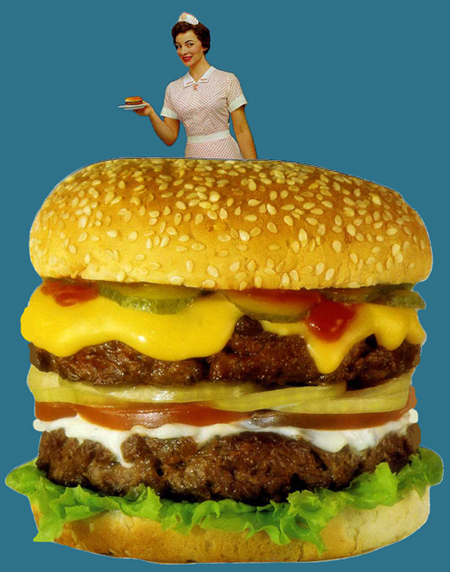
Check out the size of the White Tower hamburger as served by a “Miss Towerette” ca. 1950 and then consider how things have changed over the decades. In the 2000s  a couple of obscenely high-calorie burgers were introduced by fast food chains. Out came the Big Carl from Carl’s Jr. (920 calories) and the Monster Thickburger from Hardee’s (1,420 calories). Makes you wonder how the patrons of White Tower survived on those little morsels of yore.

The sandwiches are mentioned as two “proudly obnoxious fast food options” of the last decade. They rank #6 in Christopher Borrelli’s “10 worst dining trends of the last decade” in The Chicago Tribune.

1 Comment

Filed under guides & reviews

On the menu for 2010

I’ve been writing about the history of restaurants for about 18 months now. I thought it would get easier but instead it’s become harder. Each post takes me longer to write. Partly it’s because I keep learning more about our American restaurant past and partly it’s because I realize that readers are taking my blog seriously and I’ve got to be sure about what I say. I’m always tempted to go back and add to old posts but manage to fight off that impulse fairly well unless I learn of a blatant error.

One thing that’s been a lot of fun is hearing from people whose relatives ran or worked in some of the restaurants I’ve featured. This has been true of Toffenetti’s, the Maramor, and Don Dickerman’s Pirate’s Den.

Onward! I haven’t even come close to running out of ideas and I have an ever-growing storehouse of fabulous images. Here are some of the topics I have in mind for 2010:

• Hidden history: Afro-American women restaurant cooks and proprietors

• More tastes of a decade, beginning with 1900-1910

• Linen supply and the mob, a topic I never did get around to in 2009

• A question that intrigues me: when did chocolate desserts become big restaurant items?

• Failed fast food chains – supposedly chains offer operators a hedge against the high mortality rate of restaurants, but consider how many entire chains have vanished

• Portraits of restaurant towns, beginning with Portland OR – this is turning out to be a lot harder than I expected

• The influence of France and fantasies about Paris upon American eating places

• Confectionery-based restaurants

• Sherry’s, as a leading example of the former topic

• Sociopath turned restaurateur: Mike Romanoff

• Anatomy of a restaurateur: Colonel Harland Sanders

• Good eaters: newspaper reporters

• The role of gossip columnists in building the restaurant business

• Chinese restaurants-cum-nightclubs of the 1920s and 1930s

• Austrian-American restaurateurs, a little explored ethnic group

• Crazy restaurant equipment patents

• Speakeasies as eating places

Ooh – have I ordered too much? Is my appetite bigger than my capacity? We shall see. Best wishes to all for a delicious and satisfying new year.

8 Comments

Filed under miscellaneous