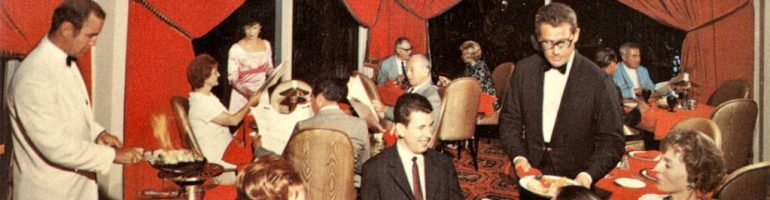

Fifty years ago this summer President Lyndon Johnson signed the Civil Rights Act of 1964. Under Title 2 of the Act discrimination by race, color, religion, or national origin was forbidden in eating places as well as hotels, motels, theaters, and stadiums.
Similar laws had been enacted by 18 northern states in the 1880s in response to the creation of “Jim Crow” laws in 20 southern states that had institutionalized segregation; however they were ineffective and rarely enforced. Racial segregation in eating places, affecting not just Blacks, but also Asian- and Mexican-Americans, was the norm in many restaurants throughout the country. Outside the South, Black diners typically were discouraged from patronizing white restaurants by hostile receptions, bad tables, and poor – or no — service.
Although President Johnson said he expected it, many people were surprised that the Civil Rights Act met with such a high degree of acceptance. American society as a whole had become convinced that unequal treatment was in conflict with the principles of democracy and that integration was inevitable. One year after passage of the Civil Rights Act an official at the Justice Department said compliance had exceeded expectations and was a “major national accomplishment.” By the early 1970s desegregation of restaurants and hotels was so uncontroversial that the question was dropped from public polls.
But change is not magical. Enforcement was required. From the start there were persistent violators who attempted to skirt the law by creating fake private clubs or by subjecting Black customers to higher prices, delayed service, and other indignities. While congratulating the nation, the Justice Department also vowed that violators would be prosecuted.
Because private clubs were exempt from the law a number of restaurants tried this route of avoidance. Some became legitimate private clubs but many were clubs in name only.
 The sham restaurants-turned-clubs were identified by things such as failing to charge dues or having no membership criteria other than race. In the case of Dixie Diners Club of Enterprise MS which claimed to promote fraternity among “connoisseurs of discriminating taste and epicurean pleasures,” a court ruled nothing had changed since its days as plain-old Richberg’s Cafe. “The only material difference between the two is that physically the club is accessible only by the entrance at the door which was formerly for whites only,” it said. The ruling noted that the club held no meetings, established no committees, and served the same food as before. Bonner’s Private Club in Crawfordville GA had previously been known as the Liberty Café, which closed when Afro-Americans tried to integrate it and reopened as a private club.
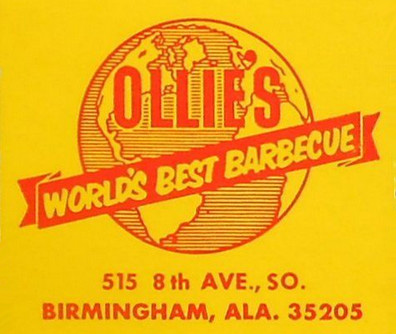 The justification for federal authority over restaurants and hotels was that they engaged in interstate commerce. So, of course, some restaurants claimed an exemption because theirs were purely local businesses. Ollie McClung, of Ollie’s Barbecue, lost a lawsuit despite his belief his business was local. “We are not located on a highway and don’t cater to out-of-town travelers,” he insisted. But as the Washington Post reported, it was exceedingly difficult for a restaurant to prove it had no interstate ties: “It would have to serve locally grown food, no tea, coffee and probably no beer, and would have to have a prominent sign saying, in effect, ‘No Interstate Travelers Served Here’ with a monitor at the door to make certain no interstate interloper slipped in.”
Another tactic was devised by ardent segregationist Maurice Bessinger who was granted an exemption for his Piggie Park Drive-in chain in South Carolina on the grounds no food was consumed on the premises. The decision was, however, soon reversed and it became clear that drive-ins would not be exempt.
It’s hard to say just how many Afro-Americans actually took advantage of the opportunity to patronize what had been all-white restaurants. It seems there was not a flood of Black diners in the first few years. But the new law was valuable to the middle-class, especially Black travelers who no longer had to rely on guidebooks such as The Negro Motorist Green Book to plot out where they could safely stop to eat or stay overnight. The Green Book became irrelevant, just as its publisher hoped it would.
Despite real advances, white Americans often overestimate the degree to which racism has disappeared. As critical as the Civil Rights Act of 1964 was in furthering equality, it did not put a complete end to racial discrimination in restaurants. Rather southern restaurants wanting to curb the number of Black diners learned to use tactics long practiced in the North. Nor have chains been free of bias. Cracker Barrel and Denny’s are among large chains hit by discrimination suits in the past couple of decades. And an academic study published in 2012 found that Black patrons continue to experience bad service based on waitstaffs’ belief that they are poor tippers. A study of 200 servers in North Carolina restaurants revealed that 38.5% discriminated against Black customers, sometimes playing a game called “pass the black table.”
© Jan Whitaker, 2014

 It's great to hear from readers and I take time to answer queries. I can't always find what you are looking for, but I do appreciate getting thank yous no matter what the outcome.

 Restaurant-ing through history
Pingback: Soul Food Universal Register: Aretha Franklin, $15 Meatloaf, Ollie’s Barbecue, Piggie Park Drive-In, Dethroning The Deceitful Pork Chop, Daddy’s Soul Food | Scrumptious Chef
Pingback: The Many Souls of African American Food | Official Web News
Pingback: The Many Souls of African American Food | women times
Pingback: The many souls of African American food - PremierGlamour
Pingback: The many souls of African American food – Slantpoint
Pingback: The many souls of African American food
Pingback: The many souls of African American food | Slantpoint Democrat
Pingback: The many souls of African American food | EuroMarket News
Pingback: The many souls of African American food - Democratsnewz
Pingback: The many souls of African American food | The H2O Standard
Pingback: The many souls of African American food -
Sadly we experienced such an incident during the mid1990’s at a chain not mentioned in your story. We were driving through Virginia with our toddler who we had adopted as an infant. After several long hours in the car, we pulled off the road for a quick breakfast.
The ruse was so subtle that for several minutes I thought perhaps I was imagining that we were being deliberately ignored. When it was clear we would have had to make a scene to be “noticed” we quickly left without making eye contact. The only sound was our child who repeatedly asked why we were leaving.
Afterwards we learned this restaurant chain was party to several lawsuits a la Denny’s ,etc
Thank you for sharing your experience. I suspect similar things happen a lot more often than are reported.